Blog ·
Materials Matter: Understanding Cabinet Construction and Longevity
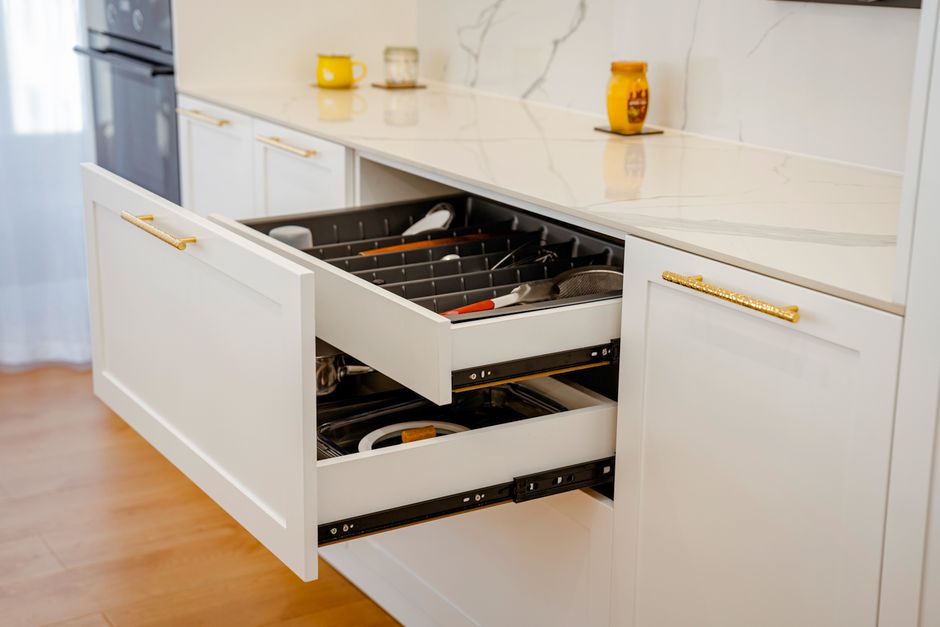
Your kitchen cabinets endure daily wear—from moisture and temperature fluctuations to the weight of dishes and cookware. Understanding the materials and construction methods behind quality cabinetry helps you make choices that will last.
Cabinet Box Construction
Cabinet boxes are typically constructed from plywood or engineered wood. Plywood, made from thin layers of wood veneer, provides superior strength and stability compared to particle board. Its cross-grain construction resists warping and holds fasteners securely, making it the preferred choice for quality cabinets that will withstand years of use.
The cabinet frame—the structural skeleton—can be made from solid wood or engineered materials. Solid wood frames, often made from hardwoods like oak, maple, or cherry, provide strength and allow for adjustable shelving systems. The quality of the frame directly impacts how well your cabinets will hang on walls and how smoothly drawers and doors operate over time.
Doors, Drawers, and Hardware
Door and drawer front materials vary widely. Solid wood doors are durable and can be refinished if desired. Wood veneer over plywood provides a beautiful finish with greater stability than solid wood. Painted finishes over substrate materials offer versatility in color choices and a smooth, clean appearance.
Hardware—hinges, handles, and slides—deserves careful attention. Quality hinges ensure doors align properly and operate smoothly for thousands of open-and-close cycles. Soft-close mechanisms prevent slamming and extend hardware life. Ball-bearing drawer slides support heavy loads and glide smoothly, even after years of use.
Joinery and Construction Methods
Joinery methods matter significantly. Mortise-and-tenon joinery, where parts are cut to fit together precisely, creates strong connections. Dovetail joints, common in quality drawer construction, distribute stress evenly and resist pulling apart. These techniques create cabinets that remain solid and reliable.
Interior finishes protect cabinet surfaces from moisture and spills. Quality finishes create a seal that prevents swelling and damage. The interior of your cabinets should be as well-finished as the exterior, as moisture damage happens even when invisible.
Making Your Selection
When evaluating custom cabinet options, ask detailed questions about construction methods and materials used. Visit showrooms where you can examine door samples, feel the quality of hardware, and see construction details. Understanding these elements helps you appreciate why quality cabinets represent a worthwhile investment in your kitchen's longevity and performance.